


Decide calmly, with accurate information
Second opinions and transparent treatment planning at accredited cancer centres in India.
Book An Appointment
Why Choose CikitsaIndia?
We connect patients from Bangladesh and across the region with accredited oncology centres in India — coordinating expert second opinions, diagnosis review, treatment planning, hospital admission, visa documentation, travel and on-ground support at every step of the cancer journey.
Our Strengths:
Cancer Care in India,
Coordinated End to End
The CikitsaIndia Cancer Care Programme works with accredited oncology centres of excellence across Bangalore that treat the full spectrum of cancers at every stage. Care at these partner hospitals spans four sub-specialities: Medical Oncology, Surgical Oncology, Radiation Therapy, Haematology, and Bone Marrow Transplant.
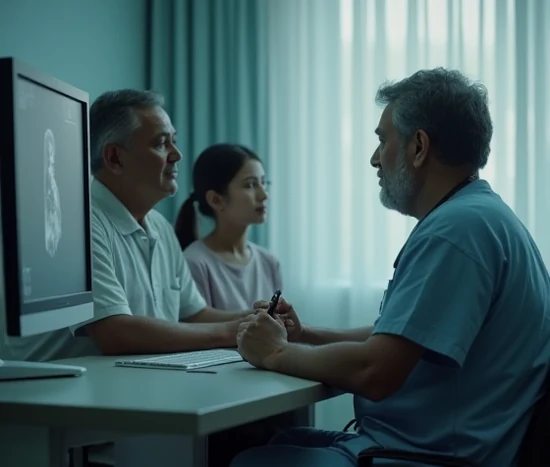
Treatments and Procedures

Chemotherapy is a common cancer treatment, often combined with surgery or radiation
therapy.
Certain drugs are used in this therapy that target and destroy exponentially
multiplying cancer cells.
This can help shrink tumours and prevent cancer from spreading to other parts of the
body.
At CikitsaIndia Cancer Care Programme, our best medical oncologists in Bangalore
use
chemotherapy to treat various cancers, including Breast Cancer, Lung Cancer,
Colorectal Cancer,
Leukaemia, and more.
There are 2 types of chemotherapy: Adjuvant Chemotherapy and Neoadjuvant
Chemotherapy.
• Adjuvant chemotherapy is given after the main treatment, such as surgery, to kill
any cancer
cells that may remain in the body.
• Neoadjuvant chemotherapy is given before primary cancer treatment, such as surgery
or
radiation therapy to help shrink the tumour.
Based on the cancer types and stages, there are various methods to administer
chemotherapy -
orally, intravenously, injected into a muscle, or topically (applied directly to the
skin).
• The patient requires multiple cycles of chemotherapy at certain intervals.
• The patient should be hydrated to negate the side effects of chemotherapy (nausea,
vomiting,
and hair loss) as chemo drugs also target healthy cells in the body.
• The doctor will offer supportive care measures to manage these side effects.
Our Facilities
Our partner hospitals offers a wide range of facilities and services to ensure top-notch care for all patients.

Advanced technology & diagnostic services

State-of-the-art
operation theatres

Minimally-invasive
approaches including Robotics

ICU & post-op
care

Physiotherapy & rehabilitation services

Easy access to medicines & lab reports

Comprehensive preoperative assessments

Patient education and support